Warmer morning swims or a longer season? Explore heating, heat pumps, covers and running costs, and what needs to work with your pool’s biological filtration.
Updated
Can a nature pool be heated?
Yes, a nature pool can be heated when its filtration and equipment are designed for it. Biological water treatment does not automatically mean cold water. The important question is which temperature and swimming season your particular pool can support.
Perhaps you want a more inviting morning dip, or a few more weeks of swimming at either end of summer. Those are useful starting points for the design. Heating should be considered alongside the water volume, filtration, position in the garden and running budget.
Choose the swimming season you want
Start with when you will actually use the pool. Keeping water comfortable for summer afternoons is a different task from heating it through cool spring nights. A larger temperature difference between the water and its surroundings generally means more heat to replace.
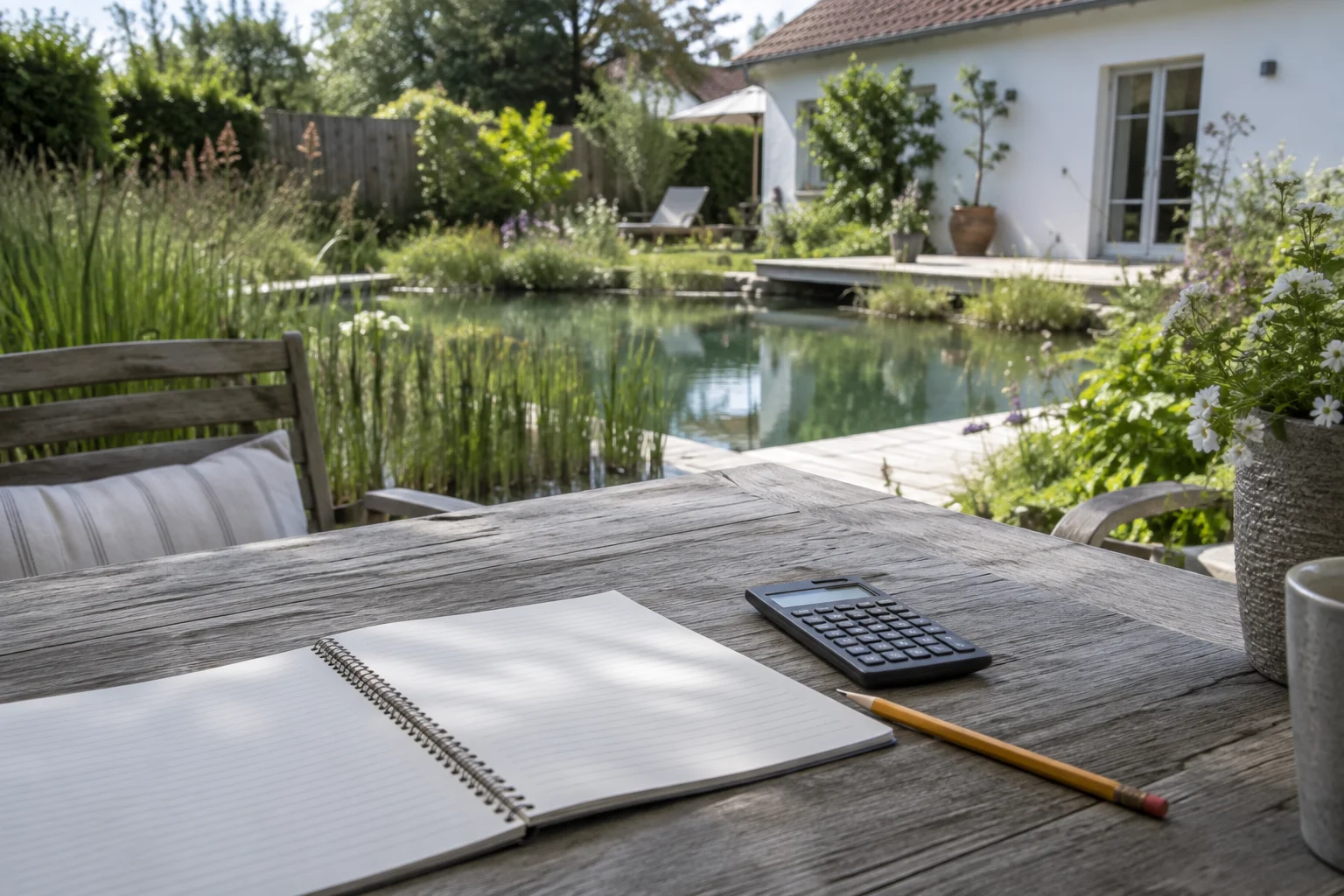
Before choosing equipment, write down three things:
Your swimming months. Summer only, or a longer season into spring and autumn?
Your preferred water temperature. Bring a target to the discussion so we can assess it against the proposed system.
Your everyday routine. Daily swims, weekends or occasional visits to a holiday home?
These choices help make an energy estimate meaningful. A low running-cost figure tells you very little if it assumes a shorter season or cooler water than you want.
Keep heating and biological filtration working together
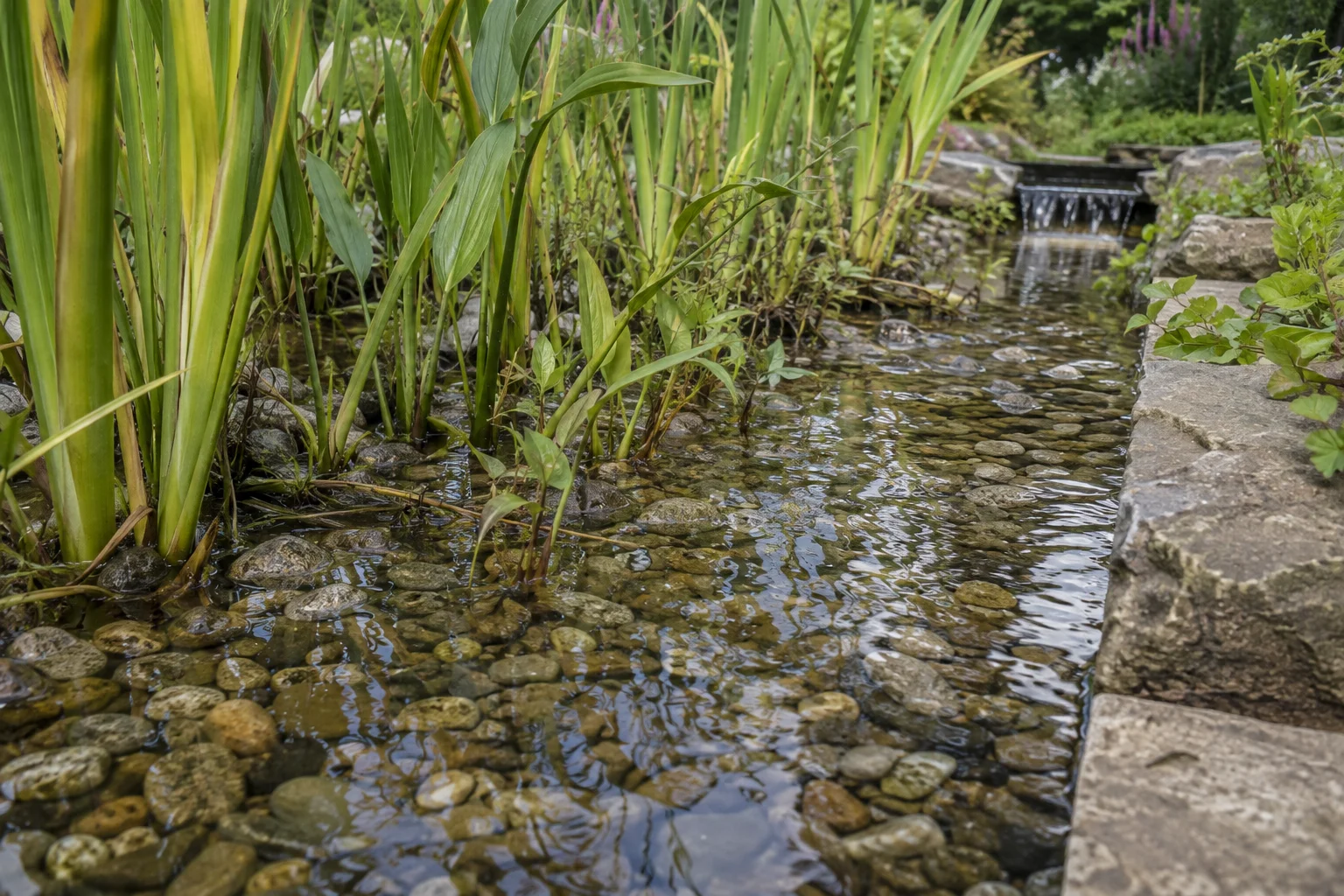
A nature pool relies on a living filtration system. Its operating conditions matter, so there is no single maximum temperature that applies to every design. The agreed temperature range must suit the filtration, circulation and installed equipment.
A heater also needs the correct water flow and connections. The pump that circulates water through the filter is not itself a pool heater. If you already have a nature pool, have the existing system assessed before adding heating or changing its operating settings.
Heating does not replace water checks or routine care. Keep following the care plan, including the required circulation, even when you are not swimming. Our guide to biological filtration explains what is happening around the swimming area.
Keep the warmth in the water
Evaporation carries heat away from an outdoor pool. An exposed position and wind across the water can increase those losses. Looking at shelter and the pool's position is therefore part of planning the heating, not just choosing a pleasant place to sit.
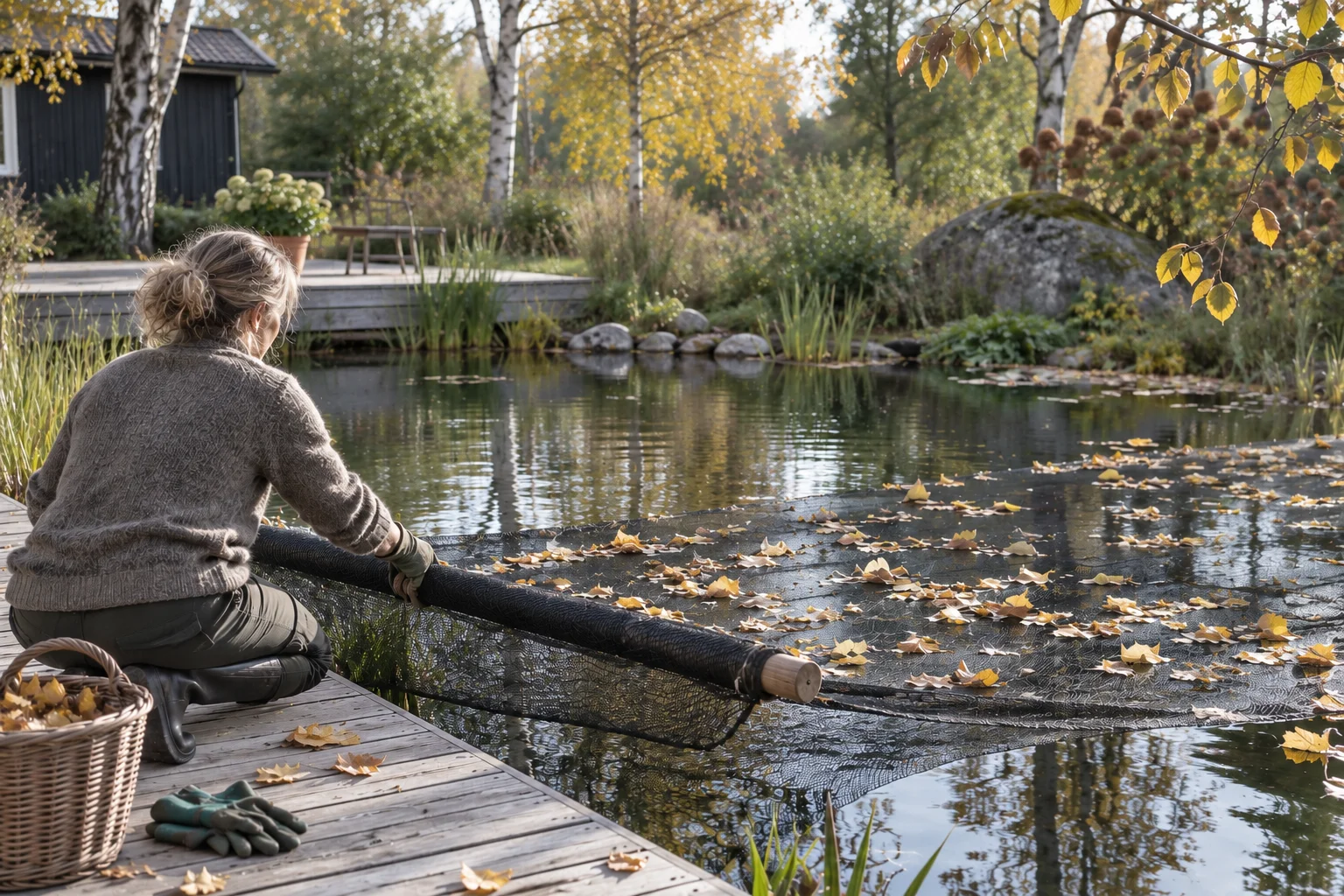
A suitable cover can reduce evaporation and heat loss when the pool is not in use. On a nature pool, its fit needs particular attention: irregular edges, planted areas and access to the water all affect what will work. Include storage and how easily you can put the cover on and take it off.
Choose a cover that suits the actual pool system. A thermal cover or leaf net is not automatically a safety cover; the safety arrangements need to be considered separately.
What does a heat pump do?
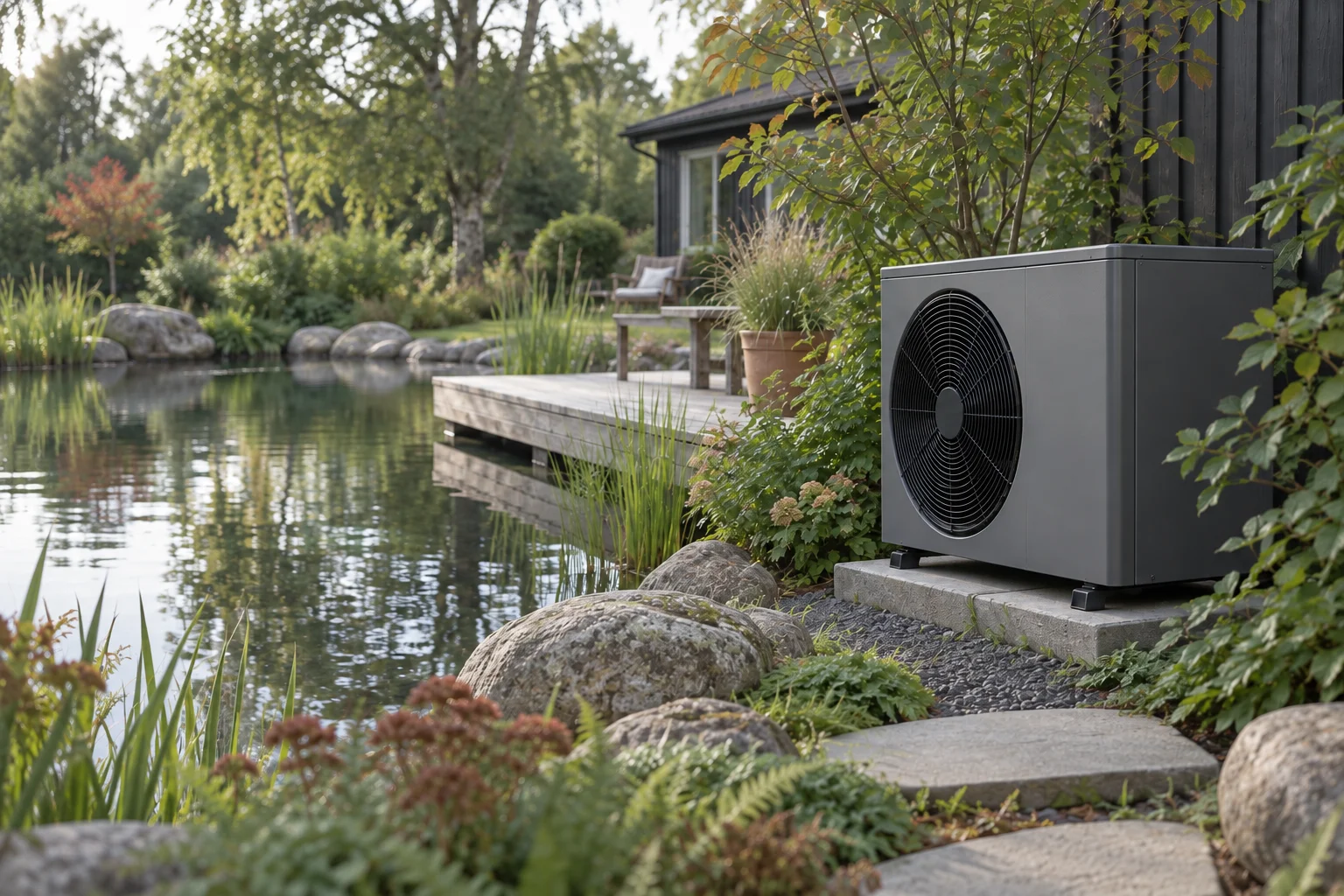
An air-source pool heat pump uses electricity to transfer heat from the outdoor air into the water. Its output and efficiency change with the conditions. A headline rating measured in warm air does not tell you how it will perform on a chilly April morning.
For a longer season, ask for performance information at the air and water temperatures you expect to use. Plan space for airflow, maintenance and condensate drainage, and consider the sound near seating areas and neighbouring gardens. Electrical supply and installation belong in the proposal too.
What will heating cost?
Keep the installed heating price separate from its running cost. The latter depends on the pool, weather, target temperature, cover use and length of the season. There is no useful annual figure without those assumptions.
For an electricity estimate, multiply the heating system's expected electricity consumption in kilowatt-hours by your applicable electricity price. Use electricity consumed, not the heat delivered to the water. Include heating separately from filtration, lighting and other equipment so the total is easy to understand.
Ask to compare two scenarios: the season you ideally want and a shorter season or lower temperature that you would still enjoy. Our guide to owning a nature pool shows how to organise the wider running budget.
Plan the end of the season too
A heated pool is not automatically a pool for year-round swimming. Pipes, pumps and the heater still need a winter plan suited to the installation. Agree when heating should stop, how the equipment is protected from frost and what is needed before restarting in spring.
If warmer water is part of your idea, mention it when you tell us about your pool. We can assess the possibilities with the design and make the scope clear in your proposal. Heating is assessed separately; do not assume it is included in a package starting price.
Continue reading
What does it cost to own a natural pool?
Build a running budget for electricity, water, care and repairs, using a worked example with clear assumptions.
How water is cleaned in a nature pool
Follow water from debris collection through the biological filter and back to the swimming area.
Natural pool care through the four seasons
Work through spring startup, summer checks, autumn leaves and winter preparation with the plan for your installation.
Your new nature pool: a care checklist
Keep this checklist for everyday checks, weekly cleaning and seasonal tasks—or arrange a little help from us.
From the first conversation to your natural pool
Follow the steps from a site visit and design proposal to construction, handover and your first swim.
Natural pool safety and permissions to check in Sweden
Check child protection, electrical work, ground changes and water arrangements before construction begins in Sweden.
Find out what suits your garden.
Let’s talk about your garden. Your first phone consultation is free.