Natural pool safety and permissions to check in Sweden
Plan the water, protection and surrounding works together. Before building a natural pool in Sweden, establish which permissions, electrical work and water arrangements apply to the actual property and design.
Updated
Ask about the whole project
A natural-looking pool still needs a clear assessment of the work being proposed. Describe its intended use for swimming, its position, the surrounding structures and any changes to ground levels. A product name such as natural pool or swimming pond is not an approval category that settles these questions.
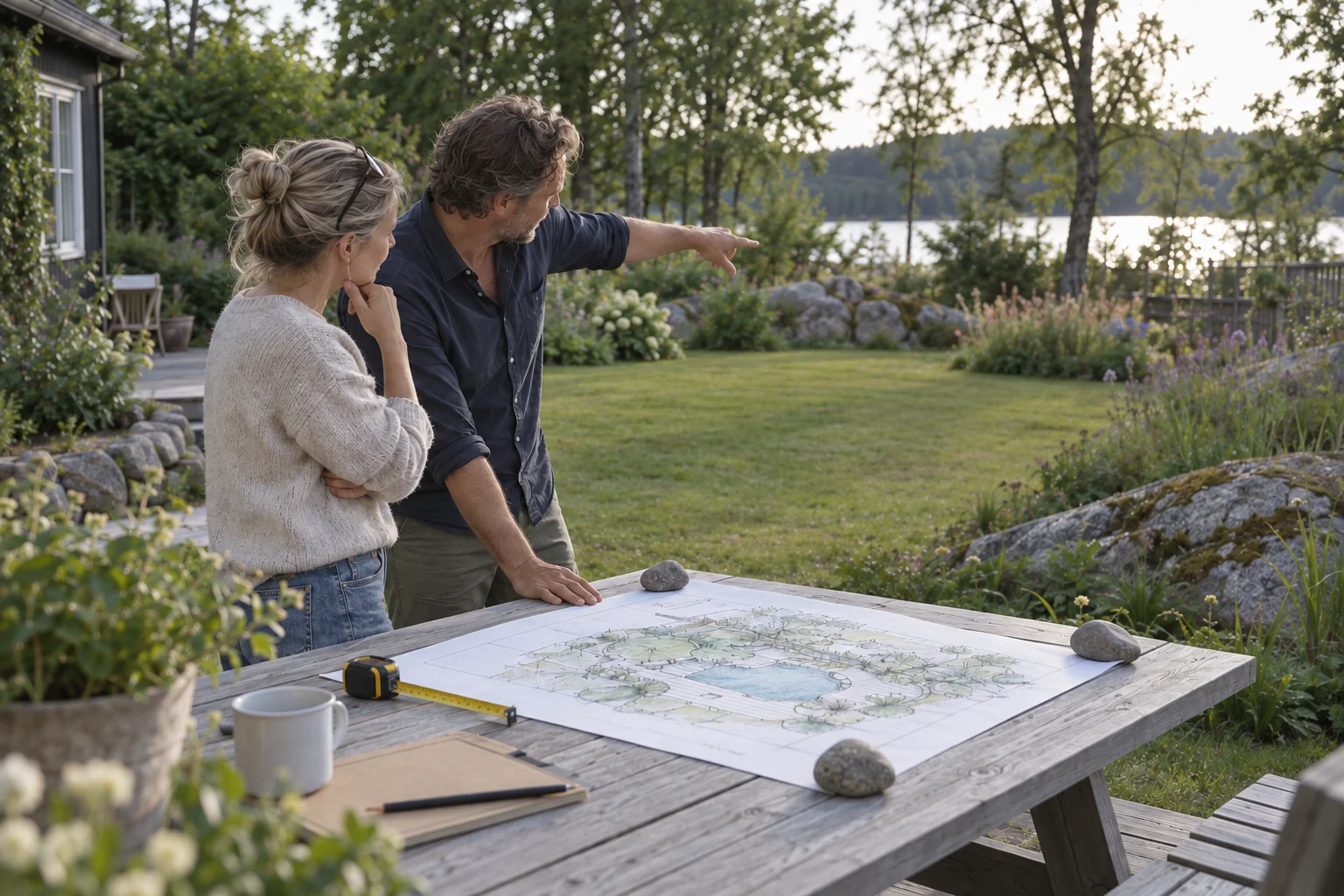
Contact the municipality responsible for the property before committing to excavation. Ask which parts need a permit, a notification or further information, and what decisions must be in place before work starts. Keep the reply with the drawing it refers to; an answer about one layout may not cover a later change.
Check ground levels and surrounding structures
Halmstad municipality's pool guidance illustrates why the entire project matters: decking, a roof, walls and ground changes can raise separate permission questions, and a connection to the public water system can require notification. This is a municipal example, not a decision for properties elsewhere.
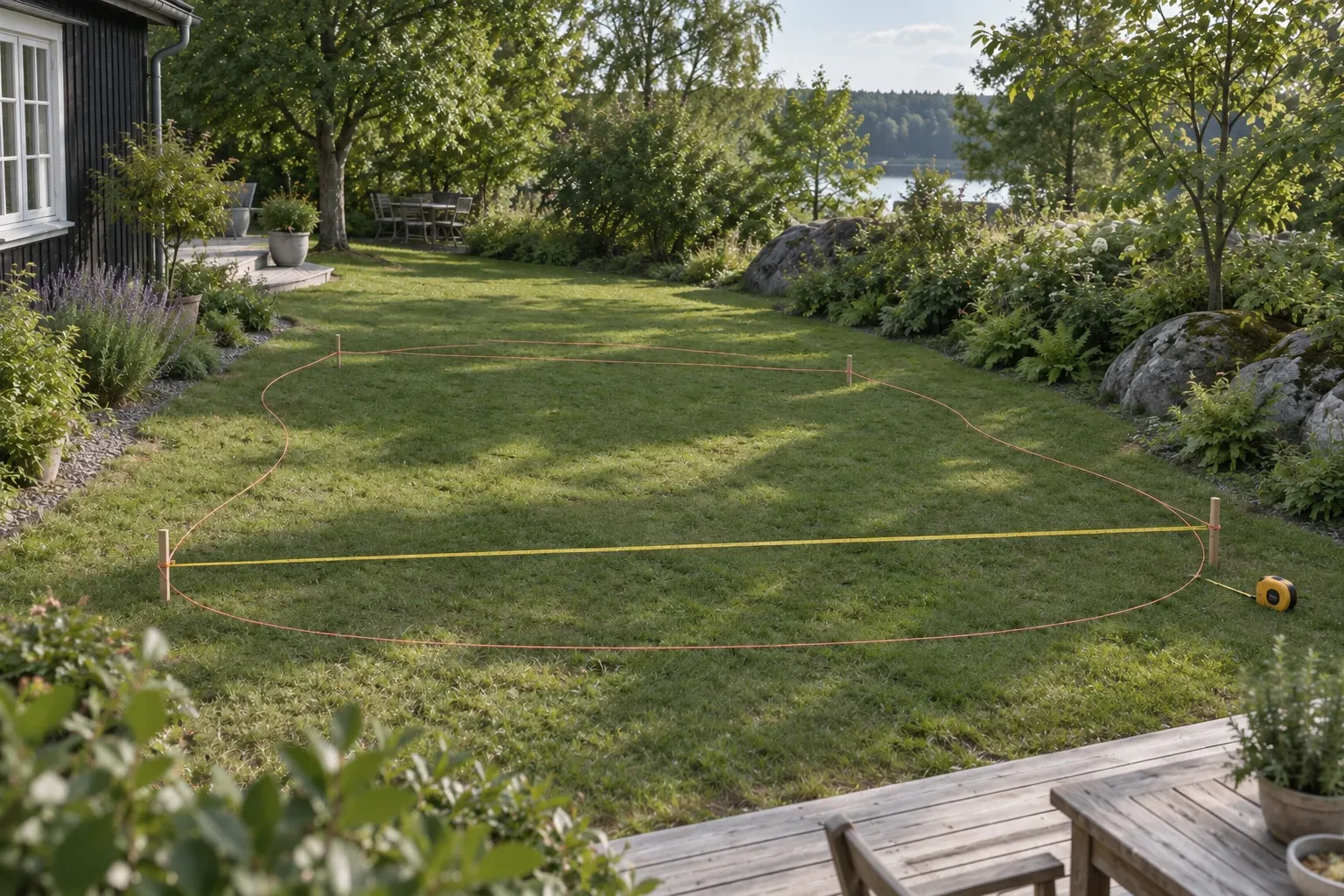
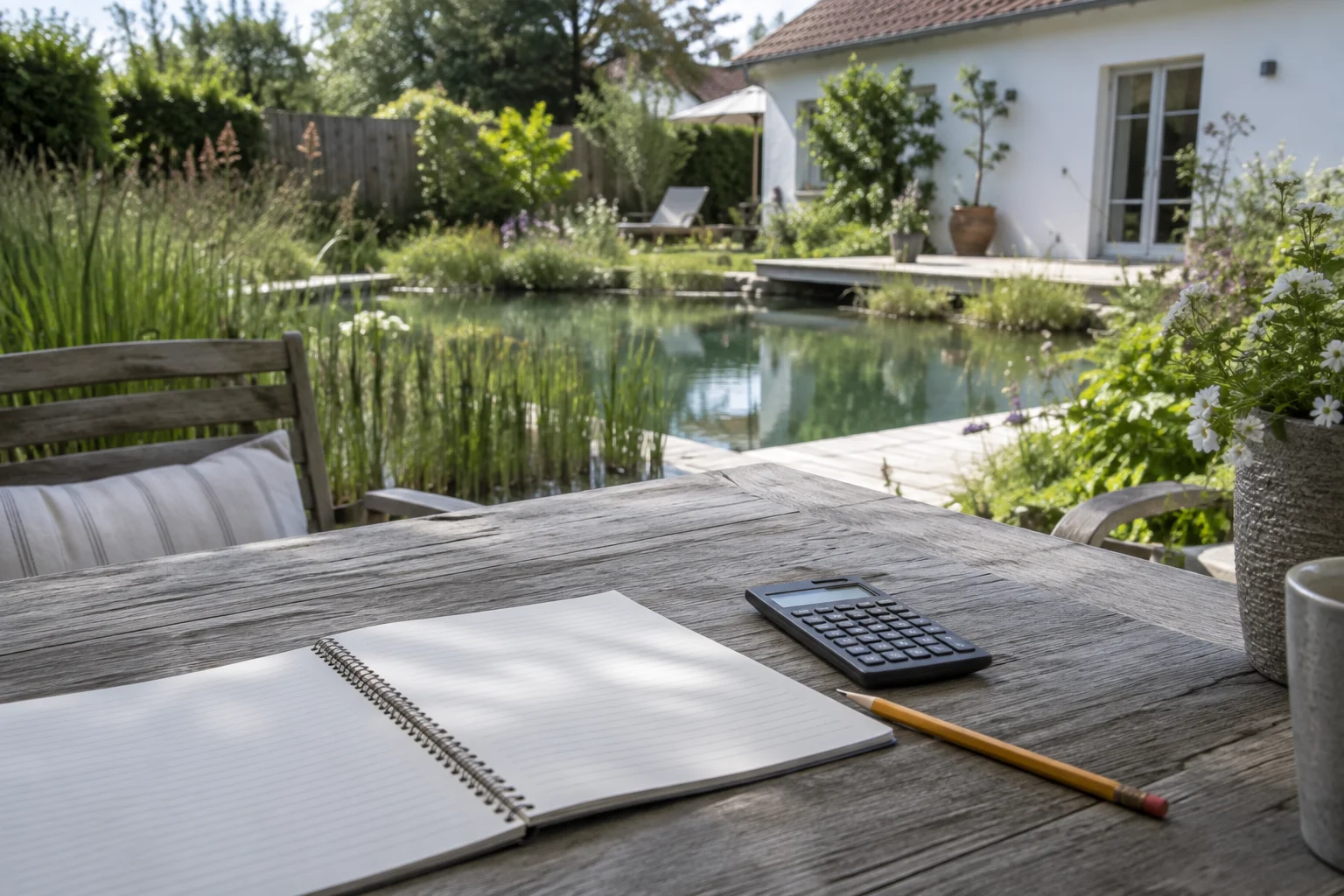
Prepare an existing-and-proposed view of the site. Show the pool, distances to boundaries and buildings, current and proposed ground levels, the equipment position and any enclosure or roof. Ask whether local planning conditions or protection of the area affect the proposal. Avoid relying on a neighbour's older project as evidence that yours has the same conditions.
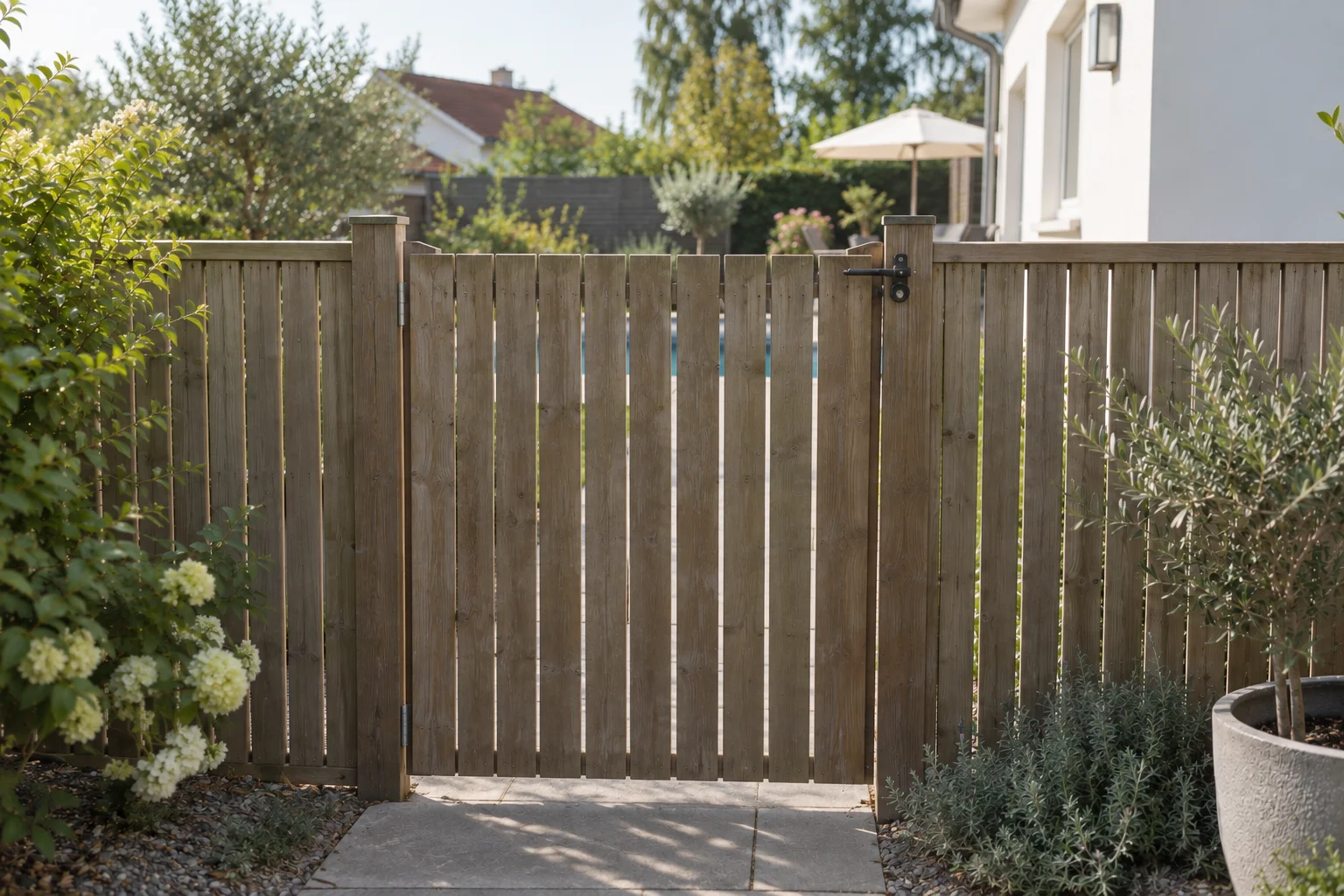
Plan child protection as part of the design
Boverket's current guidance for fixed swimming pools on plots requires drowning protection that younger children cannot pass. It defines younger children as under six and gives no exemption based on pool size or shallow water. Confirm how the rules apply to the proposed installation.
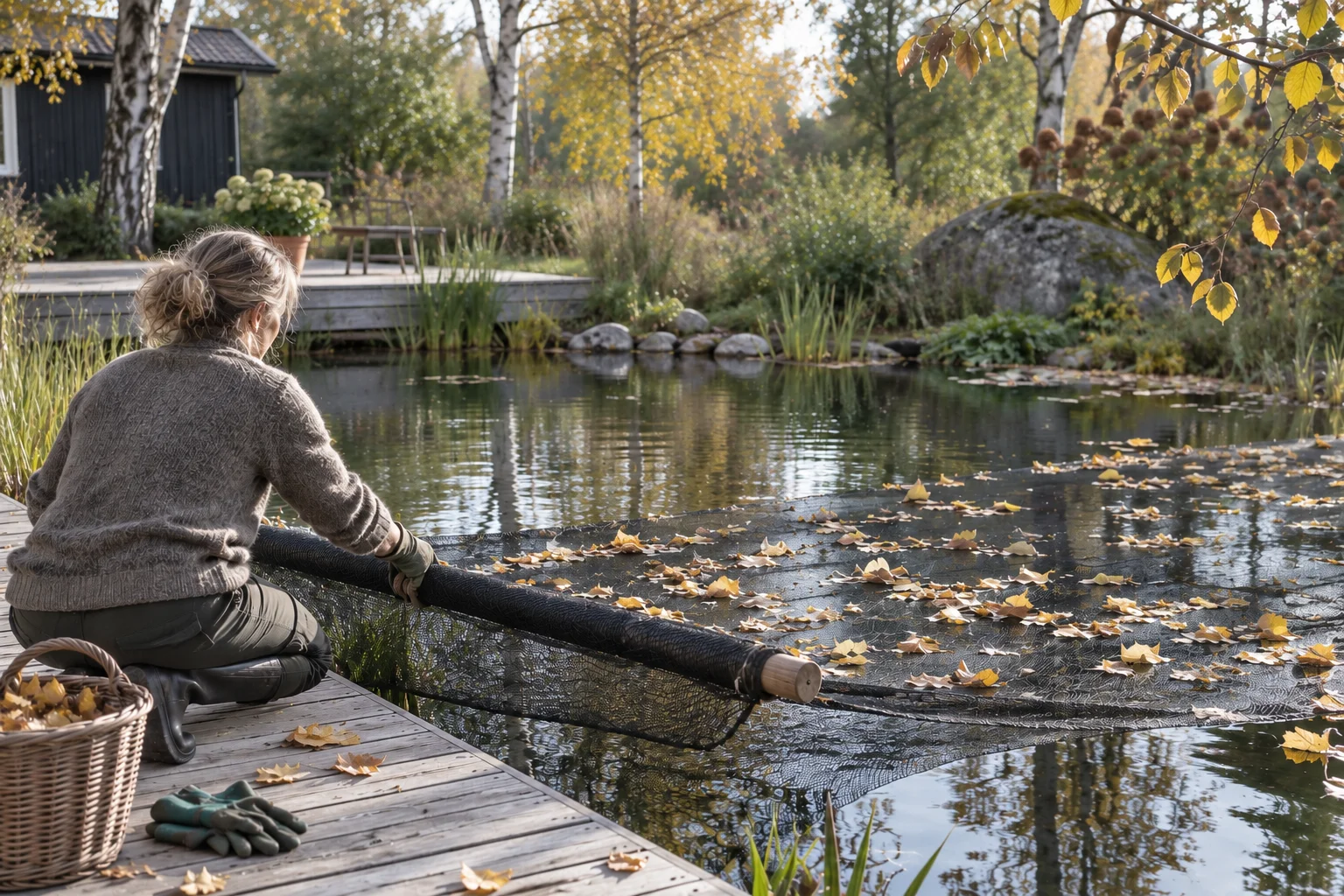
Discuss the practical solution while the edges and access are being designed. How is protection kept effective between swims? Who closes or restores it? Can it be operated comfortably in everyday use? Ask for the intended solution to be documented, including its maintenance. A leaf-collection net should never simply be assumed to be a safety cover.
Adult supervision remains part of using water with children. Keep entry and exit points understandable and arrange the surroundings so you can watch the swimming area. If you are uncertain whether a proposed protection system suits an irregular shape, resolve that with the designer and responsible authority before it becomes a construction detail.
Include electrical planning early
Elsäkerhetsverket's pool guidance emphasizes following equipment instructions, using suitable outdoor equipment and protecting the supply with a residual-current device. It also warns against placing electrical appliances where they could fall into the water. Treat electrical placement as a design requirement, not a last-minute extension lead.
For electrical installation work, use a company registered for the relevant work and verify it through Elsäkerhetsverket's contractor information and register. Agree who coordinates the electrical installation with the pool design. The designer and electrical contractor need the actual equipment specifications; a general pond-pump description is not enough.
Establish how water enters and leaves
Ask the local water provider about filling, current restrictions and any connection requirements. For example, Växjö asks owners using municipal water to contact the municipality before filling. Its advice also makes the owner responsible for avoiding harm from pool water to surrounding properties and nearby private water supplies.
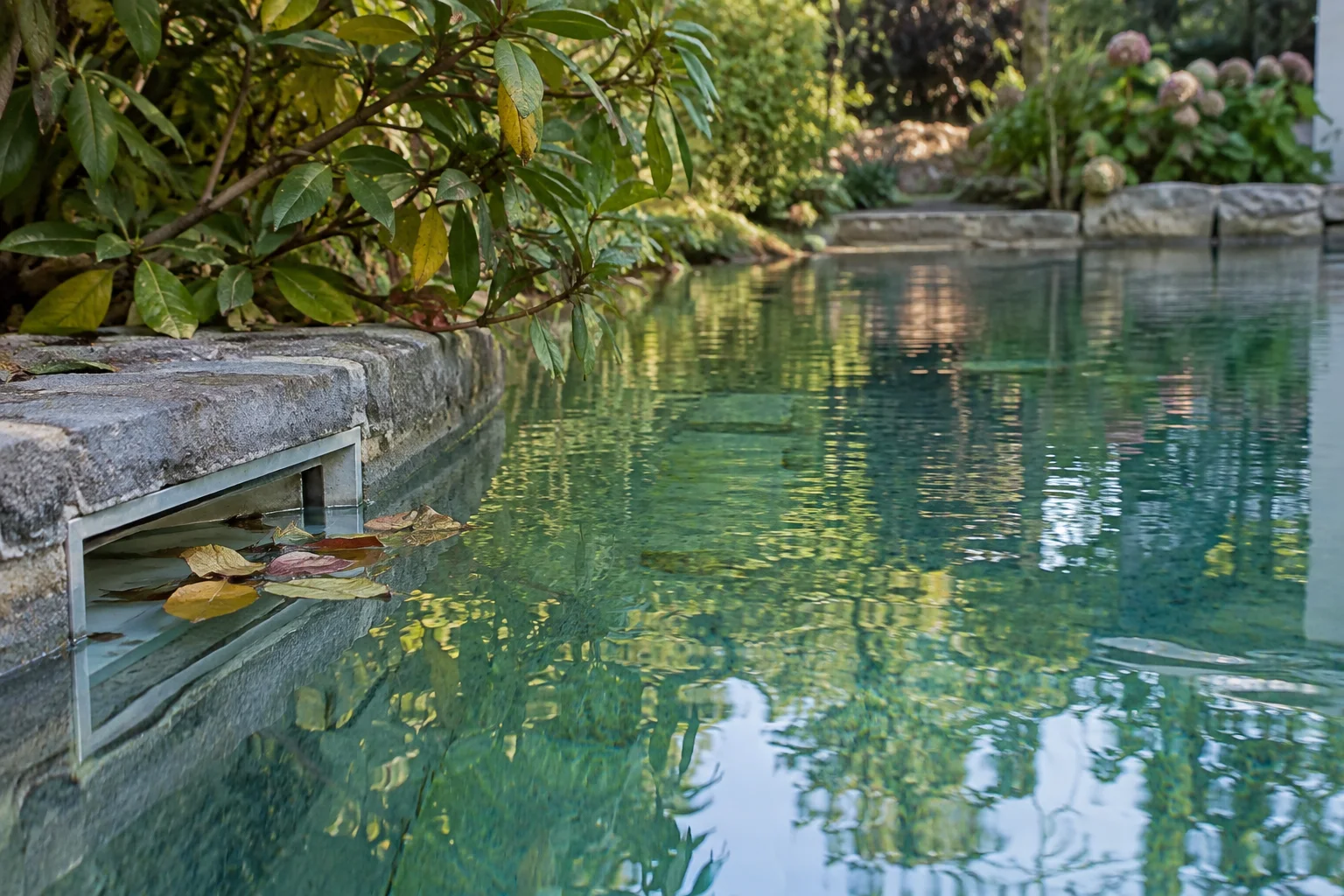
Describe overflow, maintenance water and any proposed emptying route separately. Ask the municipality or water provider which destination is acceptable for the water from your particular system. Do not assume that a storm drain, a ditch or a neighbouring low point is suitable merely because the pool is not routinely chlorinated.
Check the property's environmental constraints
If the property is near existing water or protected nature, check the applicable protection before deciding where to build. Naturvårdsverket's shoreline-protection guidance explains that protected areas can restrict structures and changes affecting access or habitats. The municipality or county administrative board can help identify the questions for the location.
Keep a short project record: the current plan, authority replies and decisions, agreed safety design, electrical responsibilities and water arrangements. Record unresolved points before a construction start is agreed. This guide concerns Swedish projects and was checked against the linked sources on 17 September 2026; those authorities determine the requirements for your case.
Discuss your natural pool project with us and bring the questions into the site assessment. An enquiry is the start of planning, not a regulatory approval.
Continue reading
How much space does a natural pool need?
Allow room for swimming, filtration, edges and access. A useful sketch includes the whole installation.
From the first conversation to your natural pool
Follow the steps from a site visit and design proposal to construction, handover and your first swim.
5 nature-pool problems to prevent during planning
Spot planning mistakes involving filtration, leaves, sealing, circulation and planting before they become pool problems.
Natural pool care through the four seasons
Work through spring startup, summer checks, autumn leaves and winter preparation with the plan for your installation.
How water is cleaned in a nature pool
Follow water from debris collection through the biological filter and back to the swimming area.
What does it cost to own a natural pool?
Build a running budget for electricity, water, care and repairs, using a worked example with clear assumptions.
Find out what suits your garden.
Let’s talk about your garden. Your first phone consultation is free.