Your pool is finished. Here is your new routine
We have finished installing your nature pool. Now it is yours to enjoy: a swim before breakfast, a dip after gardening, an evening beside the water. Keeping it in good condition becomes part of looking after the garden, with a few small habits and some seasonal attention.
Keep this checklist alongside your handover instructions. The timings below are a starting routine; your pool's equipment, planting and surroundings decide how often each task is needed. The operating settings, cleaning methods and water checks agreed for your installation always come first.
What you can leave behind from a chlorine pool
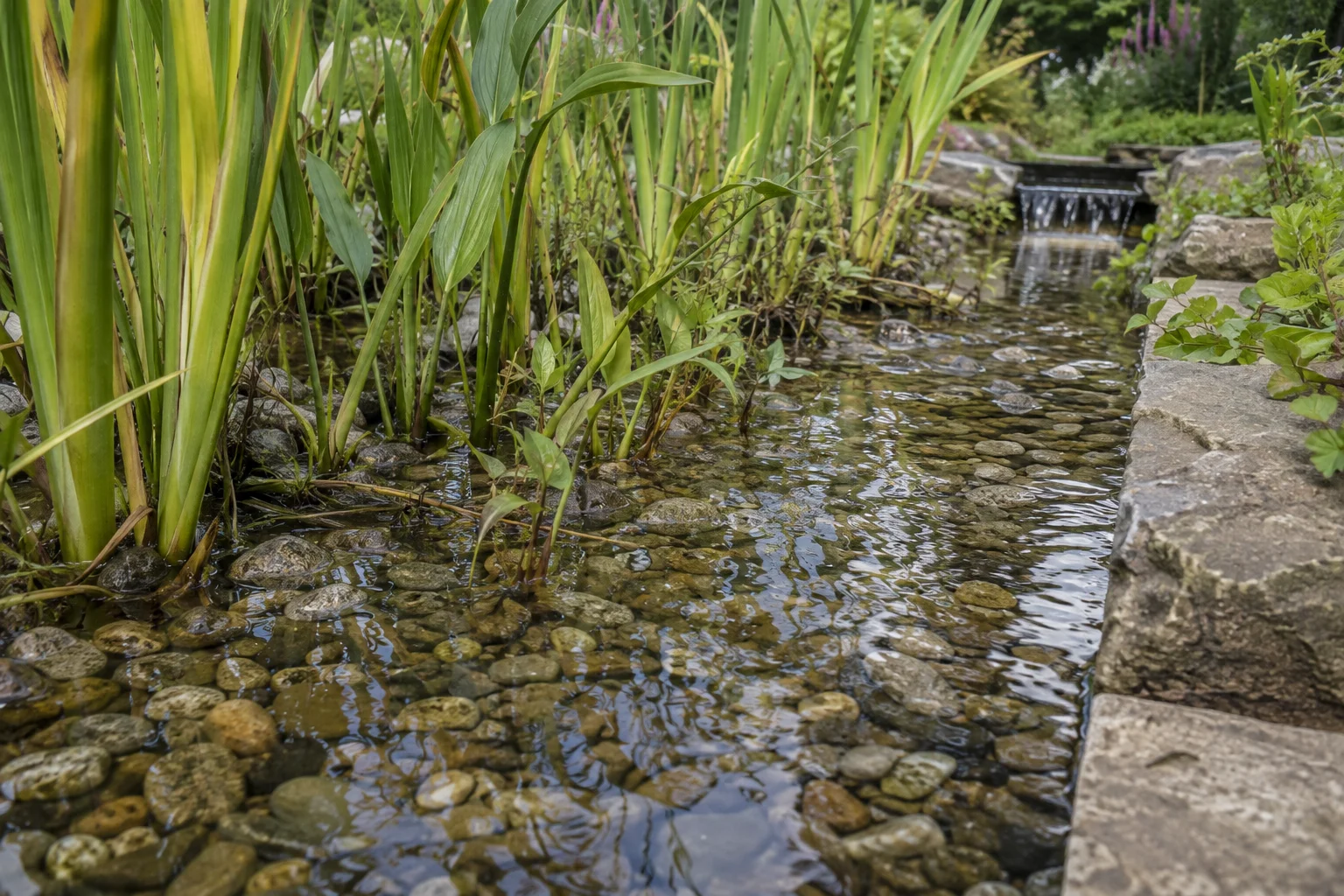
In a conventional swimming pool, disinfectant is used to control microorganisms. In your nature pool, useful microorganisms are part of the cleaning system. Bacteria living on filter surfaces help break down organic matter, while filtration and, where included, plants help manage nutrients. Your job is to keep that system working and remove debris before it builds up.
- No routine chlorine dosing or shock chlorination. You do not need to buy, store and add chlorine to maintain a disinfectant residual in a pool designed for biological filtration.
- No chlorine-level adjustment. You still follow the water-testing plan for your pool, including any agreed pH, nutrient or hygiene checks. Natural filtration does not make testing unnecessary.
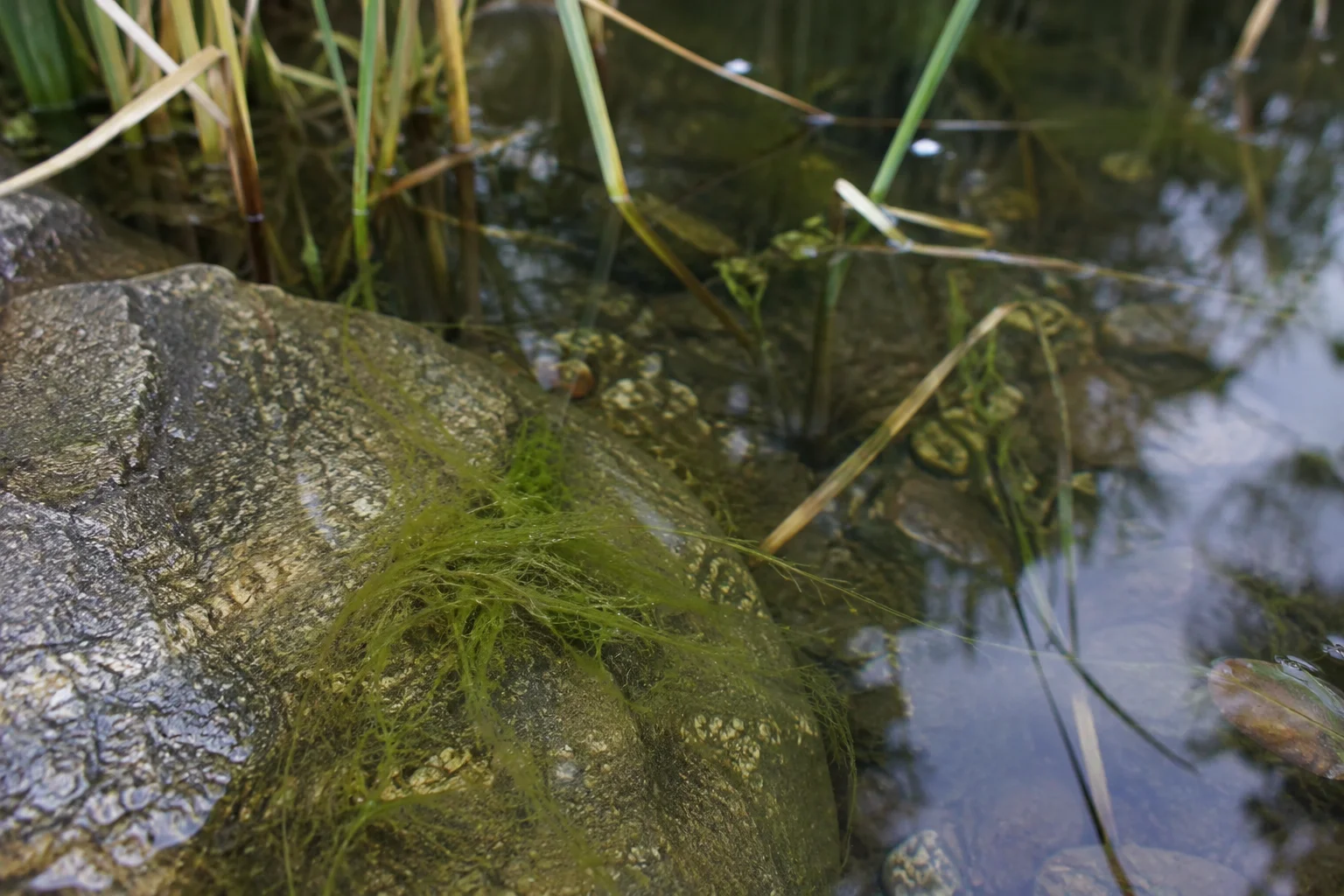
- No need to scrub every surface sterile. Protect the living filter while keeping steps and swimming surfaces clean. A natural film on submerged stone is different from a slippery step that needs attention.
The benefit is a different kind of care, without the routine chlorine treatment. It is not a promise of no maintenance, and bacteria do not make leaves or accumulated sediment disappear. Our filtration guide explains what happens along the way.
On days you use the pool
- Look at the water and the flow. Check that circulation looks as it did at handover and that the water level is within the range you were shown. Investigate a new noise, weak flow or a sudden drop in level.
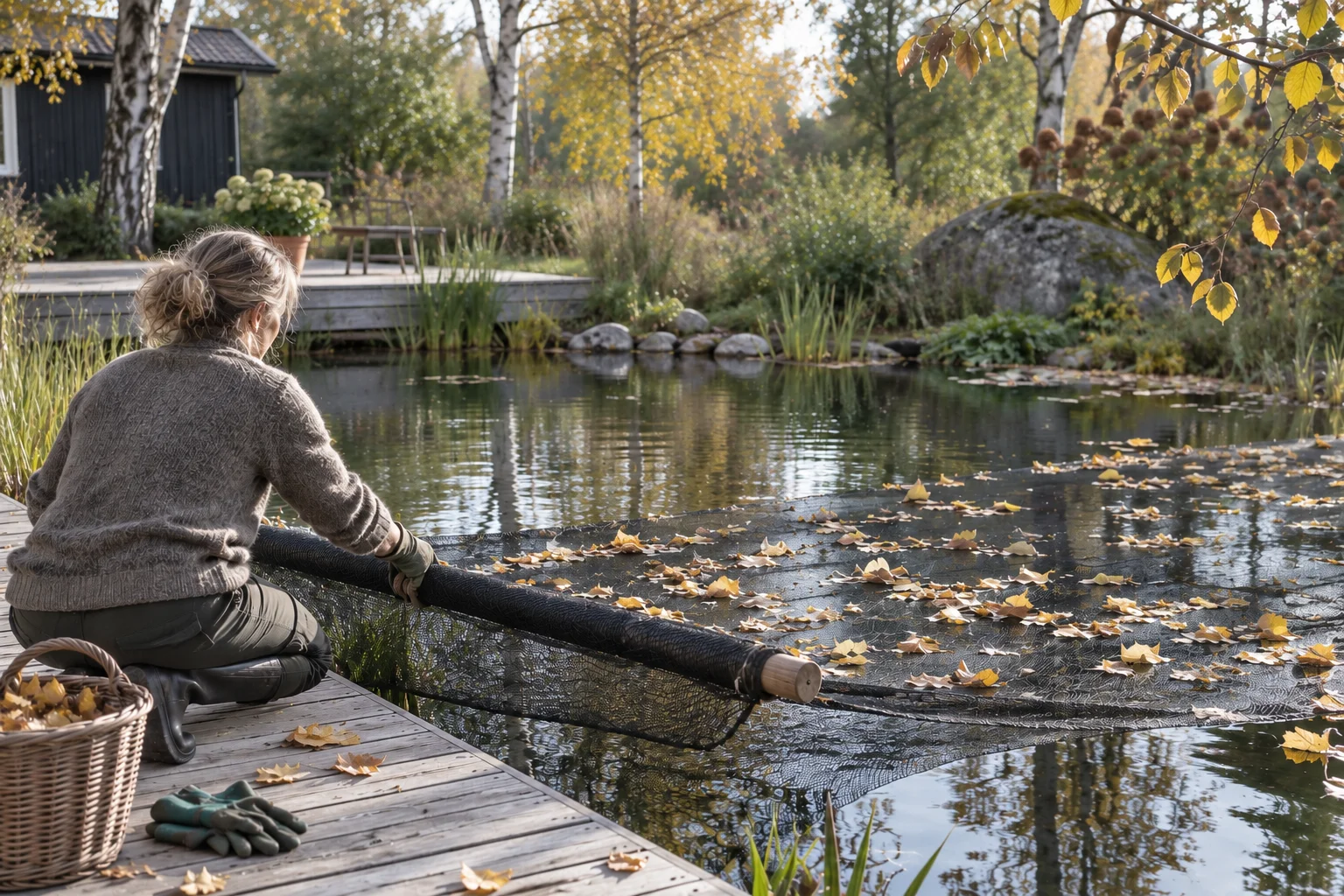
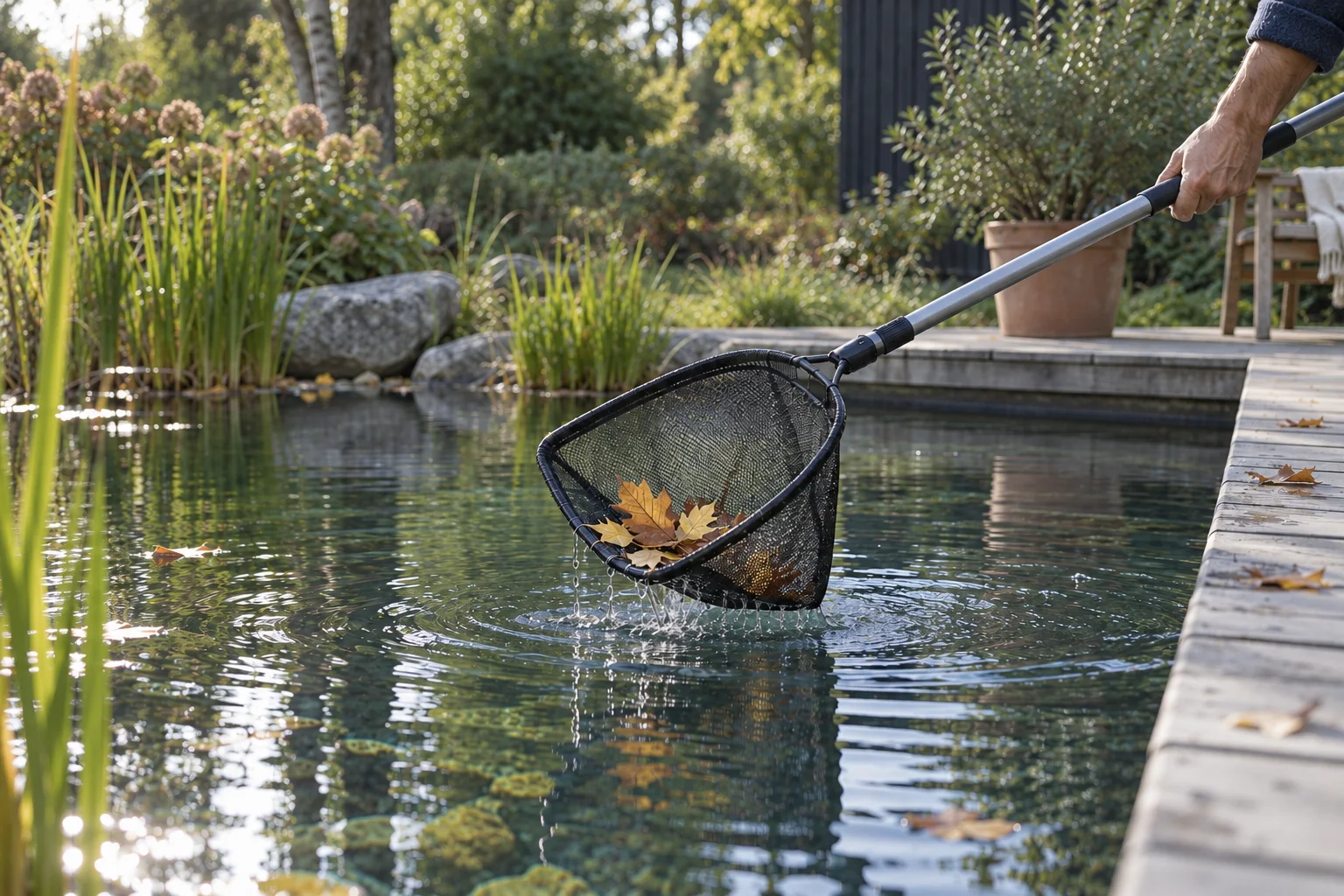
- Lift out leaves and other floating debris. Use a net before they sink, especially after wind or heavy leaf fall. Remove what you collect from the pool edge so it cannot wash back in.
- Check the way into the water. Keep steps and access surfaces clear and clean slippery patches with the method shown for your materials.
- Rinse off before swimming. Keep soil, grass clippings, soap and garden fertilizer out of the water. Avoid washing tools or rinsing cleaning products into the pool.
Once a week, and after windy weather
- Check the skimmer basket or debris screen. Empty collected material before it restricts flow. Check more often when leaves are falling; follow the equipment's shutdown and isolation instructions before opening or servicing it.
- Look for deposits in the swimming area. Remove settled debris with the pool vacuum or compatible cleaning equipment specified for your pool when needed. Keep it out of the planted filter area unless your instructions say otherwise.
- Check plants and the pool edge. Remove loose dead plant material and keep soil, mulch and lawn cuttings from entering the water. Leave established roots and filter gravel undisturbed during routine care.
- Check whether water needs topping up. Use the approved water source and filling method, within any local restrictions. Repeated or unexplained water loss needs investigation, not just another refill.
- Record the checks in your care plan. Complete water tests when scheduled and note unusual readings, changes in appearance or maintenance you have done. A short note helps us advise you if something changes.
Let the living filter do its work
A debris basket catches leaves; a biological filter provides a home for useful microorganisms. They need different care. Emptying the basket does not mean washing out the biological filter every week. Clean or flush that filter only at the interval and in the way specified for your installation.
Keep circulation on its agreed operating schedule. Do not turn it off between swims or change its settings to save electricity without checking with us. Avoid chlorine, disinfectants, household cleaners and off-the-shelf algae treatments. Add bacteria products or other treatments only if they are part of your pool's care plan, with the specified product and dose.
During the first season, the biological system needs time to establish. Ask us about changes rather than trying to correct every trace of algae with a product. Persistent cloudiness, a new smell or a marked change in the water needs assessment; clear-looking water alone does not confirm bathing quality. If contamination is suspected, pause swimming and contact us.
A little extra care when the seasons change
- Spring: inspect edges and access after frost, remove dead plant material and accumulated sediment as directed, and restart equipment in the prescribed order. Complete the agreed water checks before swimming resumes.
- Summer: keep up the small tasks, watch water levels in dry weather and check baskets more often after busy swimming days or storms. Arrange for someone to cover the routine while you are away.
- Autumn: collect leaves more frequently and cut plants back according to the planting plan. If a leaf net is specified, fit and remove it as instructed; it is not a safety cover.
- Before frost and through winter: follow your pool's winter plan for pumps, pipework, water level and cleaning equipment. Do not improvise a shutdown or drain the pool. Different installations need different frost protection.
For more detail, keep our seasonal care guide with this checklist. Plan any specialist service before you need it, especially ahead of winter.
Prefer to leave the care to us?
You can enjoy your nature pool without taking on all the upkeep yourself. For a small fee, Faunapoolen can help with the care or look after it for you. Whether you need a hand with one task, seasonal care or ongoing help, we agree the work and price with you beforehand.
Email us about care for your pool. Tell us what you would like help with, and we will take it from there.